
 image sourced from original article at
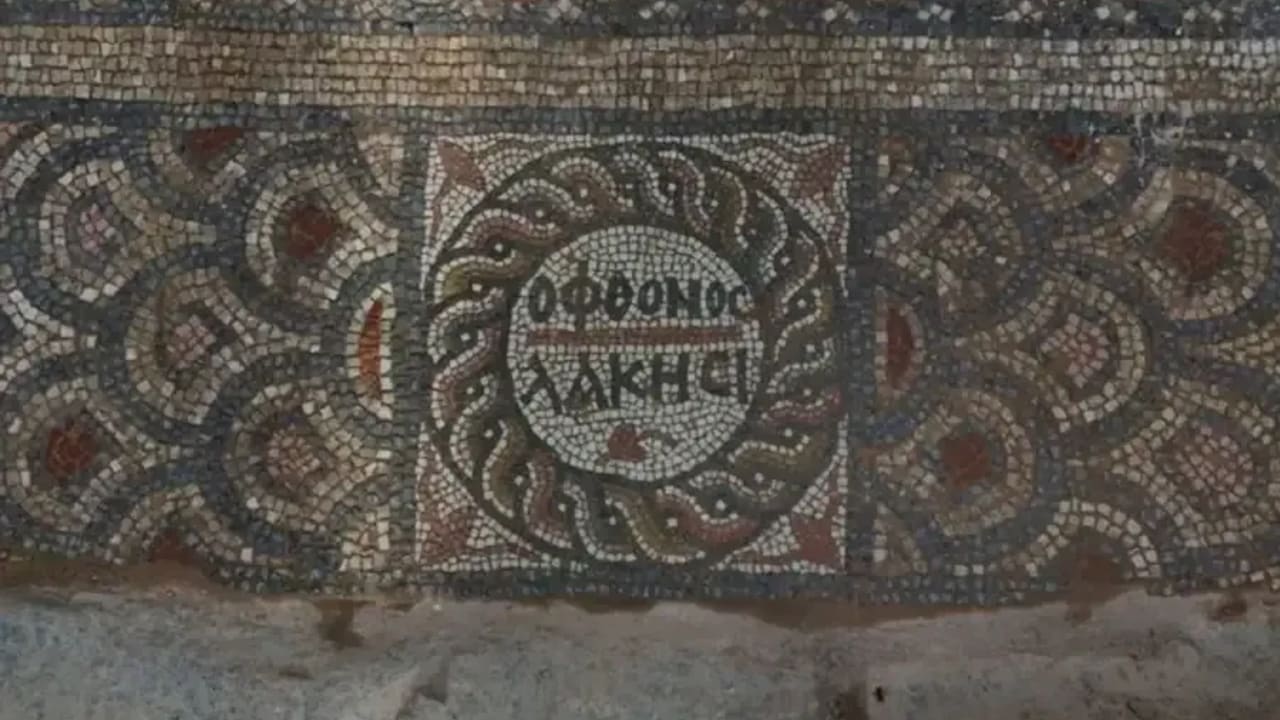
 Archaeologists in the ancient city of Syedra in southern Turkey have uncovered a nearly 15-square-meter mosaic featuring two ancient Greek inscriptions. One, placed at a room's threshold, translates roughly to 'let the jealous burst,' a sentiment that echoes the modern expression that critics will always criticize. A second inscription in the center invites residents and guests to 'use it with joy' or 'use it with good fortune.'
The mosaic was found in the entrance hall of one of the city's largest and most significant residential buildings, a three-story mansion occupied from the second to the seventh centuries of the common era. The structure reflects a period of prosperity, with upper floors accessible from the northern side and elaborate decoration suggesting wealth and social importance.
Scholars interpret the threshold inscription as a warning against envy, possibly serving as a protective message against ill will or the evil eye. The discovery offers insight into daily life, beliefs, and artistic expression in the late Roman and early Byzantine periods, when the city experienced substantial construction and cultural activity despite times of regional instability.