
 image sourced from original article at
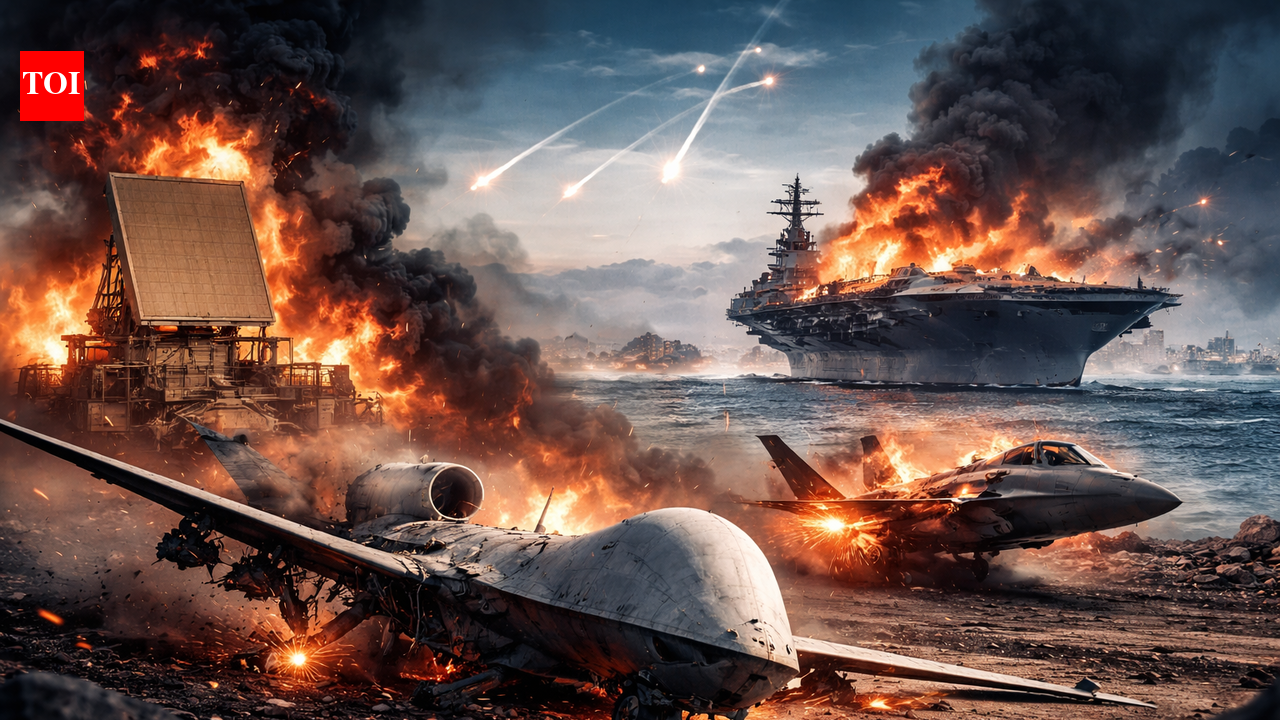
 In 21 days of conflict with Iran, the United States and Israel have lost or seen damaged more than two dozen aircraft and several high-value military systems. At least 17 American aircraft were affected, including 12 MQ-9 Reaper drones, three F-15 Strike Eagle jets lost in a friendly fire incident, and a KC-135 refuelling tanker crash that killed six crew members. An F-35 stealth fighter jet was also reportedly struck over Iranian airspace, marking a potentially significant development if confirmed. Israel has also reported the loss of more than a dozen drones, bringing combined aircraft losses to 28.
Iran has focused on targeting advanced radar and missile defence systems. Several AN TPY 2 radars linked to Terminal High Altitude Area Defense systems were reportedly hit in countries including Jordan, Saudi Arabia, and the United Arab Emirates. A long-range early warning radar at Al Udeid Air Base in Qatar was also confirmed damaged. These systems are central to the United States layered missile defence network and are among the most expensive and limited assets in its arsenal.
The USS Gerald R Ford aircraft carrier was rendered temporarily inoperable after a major onboard fire, though not due to direct enemy action. The incident, now under investigation, occurred during an extended deployment that had already strained the crew and delayed maintenance. Meanwhile, the financial burden of the war has surged, with munitions costs exceeding 12 billion dollars in the first six days and total additional funding requests surpassing 200 billion dollars.
While the United States and Israel have inflicted significant damage on Iran, the scale of their own losses and the apparent effectiveness of lower-cost Iranian tactics have drawn global attention. The conflict is raising broader questions about the vulnerability of advanced military platforms and the long-term strategic and financial implications for Washington and its allies.