
 image sourced from original article at
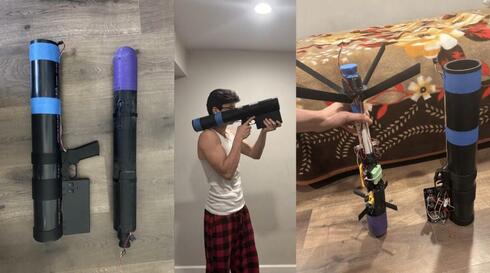
 A video circulating online shows a prototype shoulder-fired guided missile built for less than 100 dollars using household tools, a three dimensional printer and off the shelf electronics. Developed by independent engineer Alisher Khojayev and shared publicly online, the design features folding stabilizing fins, navigation based on the Global Positioning System and a compass, and a simple flight computer powered by a low cost microcontroller. The project also outlines a distributed camera network capable of identifying airborne targets and transmitting guidance data in real time.
Security officials describe the development as a wake up call, highlighting the vast cost gap between this prototype and conventional military systems. A standard shoulder launched interceptor in the United States costs hundreds of thousands of dollars, while Israeli air defense interceptors range from tens of thousands to far more per use. By contrast, the new design suggests a path toward decentralized, inexpensive production that bypasses traditional defense supply chains.
The emergence of three dimensional printed weapons has been accelerating worldwide, with manufacturers and battlefield innovators using additive manufacturing to produce missile and drone components more quickly and cheaply. Advances in stronger printable materials and miniaturized electronics have enabled a shift from basic homemade firearms to guided weapons integrating sensors, software and artificial intelligence. Analysts warn that the ability to share digital blueprints instead of smuggling physical arms could challenge global arms controls and potentially reshape the balance between state militaries and non state actors.