
A new study from researchers at Jerusalem's Hebrew University reveals that ancient pottery from the Halafian culture in northern Mesopotamia and the Levant features botanical motifs demonstrating advanced mathematical and geometric thinking. The analysis of hundreds of pottery fragments, dating back to around 6200-5500 BCE, shows that early humans used symmetry, repetition, and spatial division in their art long before the development of written language or numbers. The researchers documented vegetal designs from 29 archaeological sites, noting that these motifs reflect a conscious artistic choice and a cognitive shift towards appreciating symmetry and aesthetics. The study suggests that the depiction of flowers and plants was motivated by their beauty and symmetry, rather than agricultural or ritualistic purposes, and may be linked to practical aspects of village life such as sharing resources.
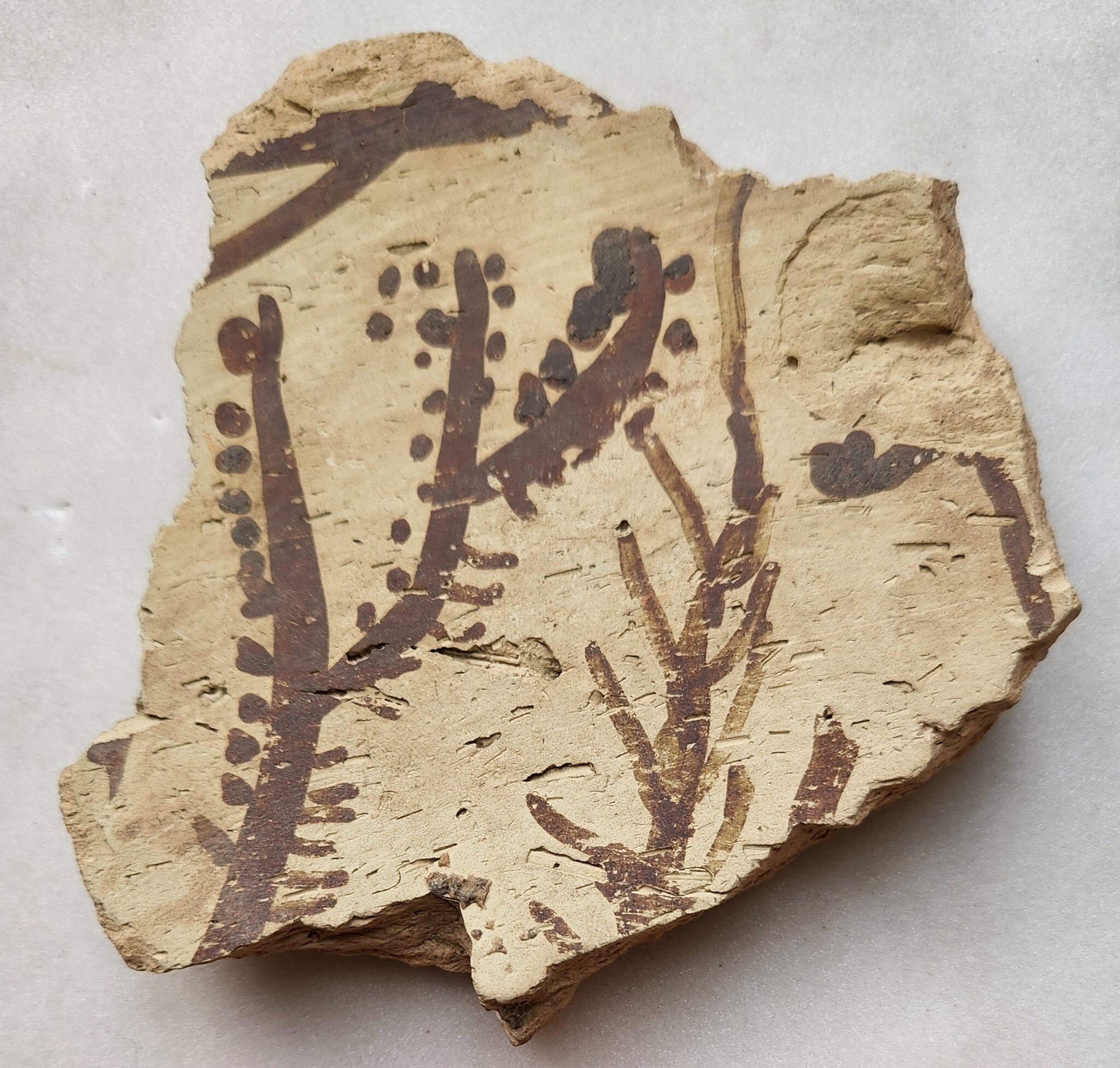 image sourced from original article at https://www.timesofisrael.com/study-of-prehistoric-botanical-art-in-the-levant-suggests-ancient-man-could-do-math/
Original article source: https://www.timesofisrael.com/study-of-prehistoric-botanical-art-in-the-levant-suggests-ancient-man-could-do-math/
Source Id: 9009515850