 image sourced from original article at
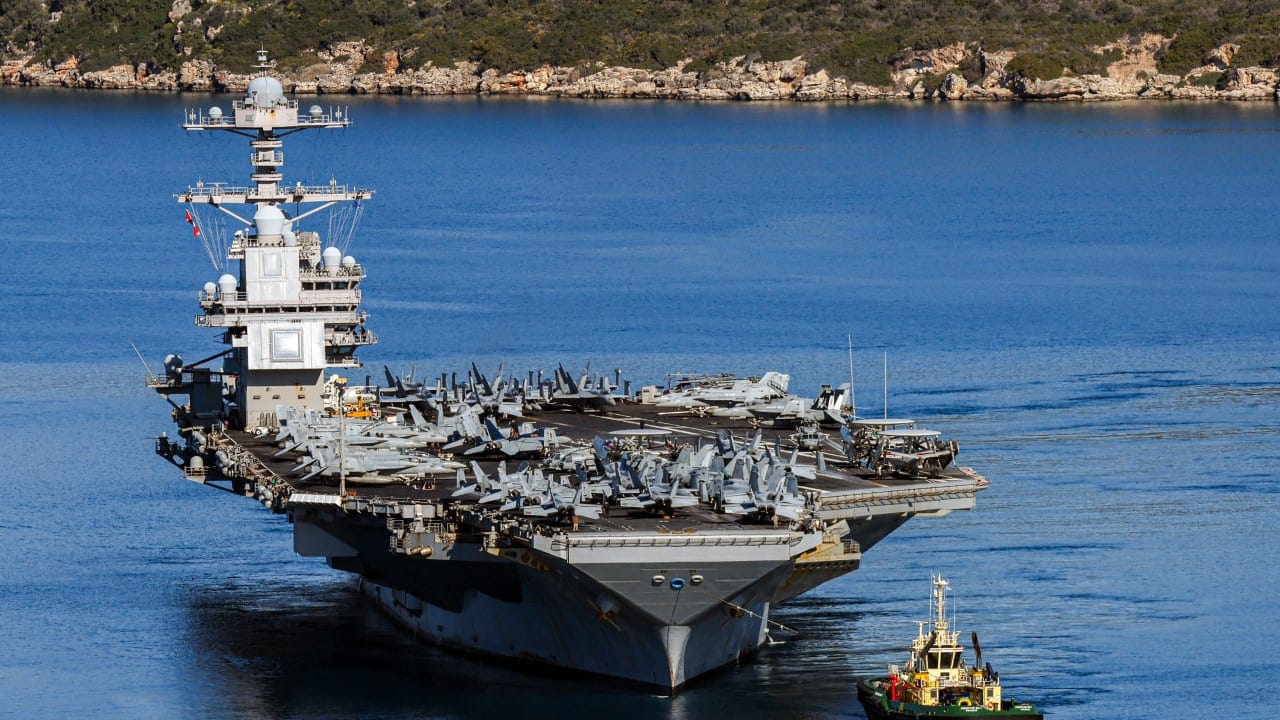
 The United States Navy aircraft carrier Gerald R. Ford, the most expensive warship ever built, is sailing toward the eastern Mediterranean as regional tensions rise. Operating under strict secrecy, the nuclear powered vessel has disabled public tracking systems and can travel at speeds exceeding 30 knots, making it difficult to monitor. Its deployment is widely viewed as a strategic show of force and a powerful deterrent.
Costing about 13.3 billion dollars to build, with total research and development expenses reaching roughly 37 billion dollars, the ship represents a generational leap in naval engineering. It was constructed over more than a decade using advanced digital modeling and features a redesigned flight deck for more efficient aircraft operations. Two next generation nuclear reactors generate significantly more electrical power than earlier carriers, enabling advanced aircraft launch and recovery technologies.
The carrier can support more than 75 aircraft and sustain up to 160 flight missions per day, with the capacity to surge to 270 in times of crisis. Automation reduces crew requirements, while improved living quarters and a fully equipped onboard hospital enhance conditions for the roughly 4,500 personnel aboard. Despite early technical setbacks, including launch system failures and plumbing issues, the vessel is now considered fully operational.
As it approaches Israel’s shores, the carrier provides the United States with extensive offensive and defensive capabilities, including long range radar detection and rapid air strike potential. Combining nuclear propulsion, advanced aviation systems, and cutting edge engineering, it stands as a symbol of military power and technological dominance in a volatile region.