
 image sourced from original article at
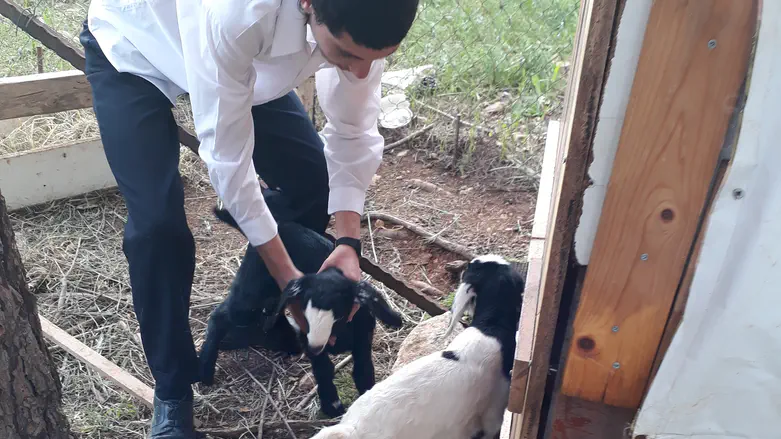
 The article explores the Yom Kippur service of the High Priest, focusing on the two identical he-goats brought before the Almighty, one designated 'for Hashem' and the other 'for Azazel'. Drawing on classical commentators, it explains that the two goats symbolize profound spiritual themes, including the twin figures of Jacob and Esau, and the divergent paths of closeness to the Divine versus spiritual estrangement. The casting of lots represents destiny shaped by moral and spiritual choices.
Several sages interpret the goats as representing two categories of transgressions: sins between אדם and the Almighty, and sins between אדם and fellow אדם. The goat offered in the Sanctuary atones for failures in the relationship with the Divine, rooted in the sin of the golden calf. The goat sent to the wilderness atones for interpersonal sins, rooted in the sale of Joseph by his brothers. Because these two spiritual failures require distinct forms of repentance, two separate yet identical offerings are mandated.
The requirement that the goats be identical underscores the equal gravity of both types of commandments, just as the two tablets of the covenant were given together. The article concludes with a moral reflection: like the two goats, two individuals may stand side by side on the Day of Atonement, outwardly alike, yet their inner choices determine radically different spiritual destinies — one ascending toward holiness, the other drifting toward spiritual desolation.