
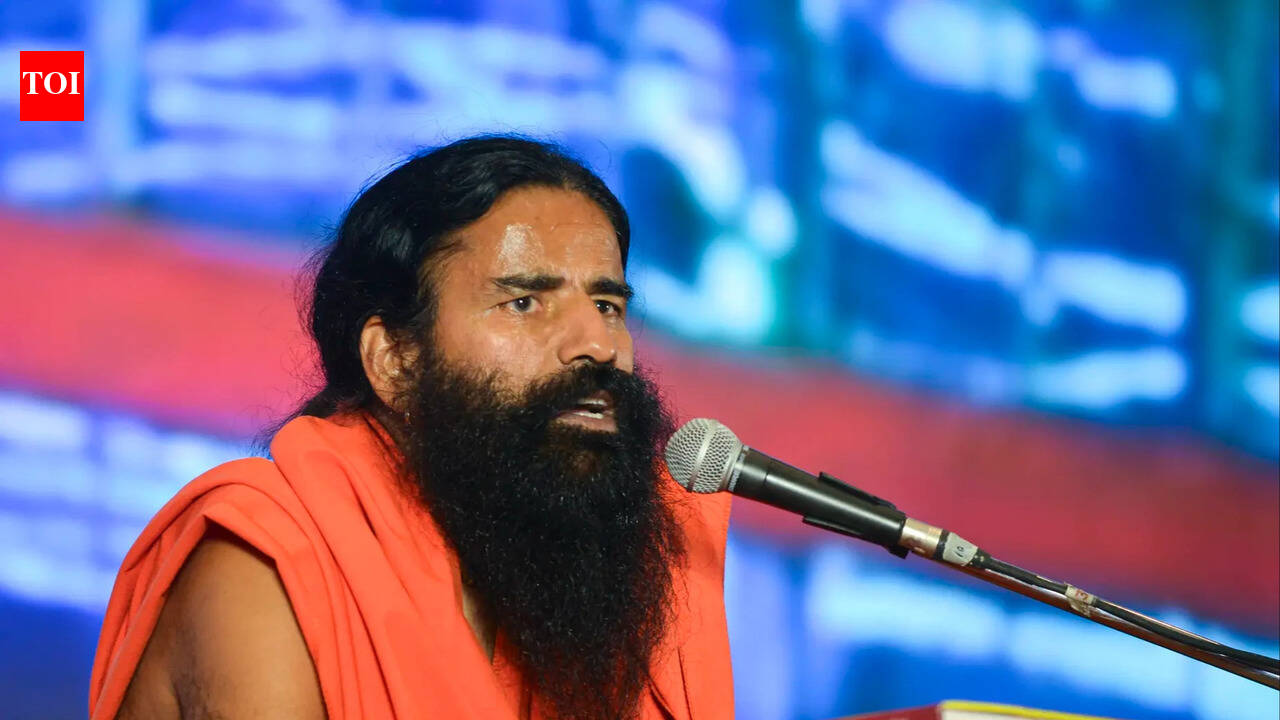
 image sourced from original article at
 Baba Ramdev, in a conversation with The Times of India, shared his views on reshaping India's education system, arguing that education forms the foundation of both individual character and national identity. Moving beyond his public image as a yoga advocate and entrepreneur, he described himself as a 'Universal Health Minister' and stressed that true nation-building begins in classrooms.
A central theme of the discussion was the decline of the traditional gurukul system, which he believes once emphasized wisdom, discipline and character alongside literacy. He criticized colonial-era education reforms introduced in 1835 for promoting dependence on Western models, calling it the start of 'mental slavery'. While acknowledging modern advances in literacy and scientific progress, he maintained that education must foster self-respect rather than imitation.
Ramdev advocated for a balanced model that blends cultural roots with modern science and innovation. He argued that education should create innovators instead of mere job seekers and pointed to countries such as Israel, Japan and South Korea as examples of how strong education systems build global influence.
He also outlined a vision for a 'global gurukul' under Patanjali, where students from around the world would study a curriculum combining ancient philosophy with contemporary subjects like entrepreneurship and research. According to him, such a system could nurture confident, ethical citizens and position India as a global leader in holistic education.