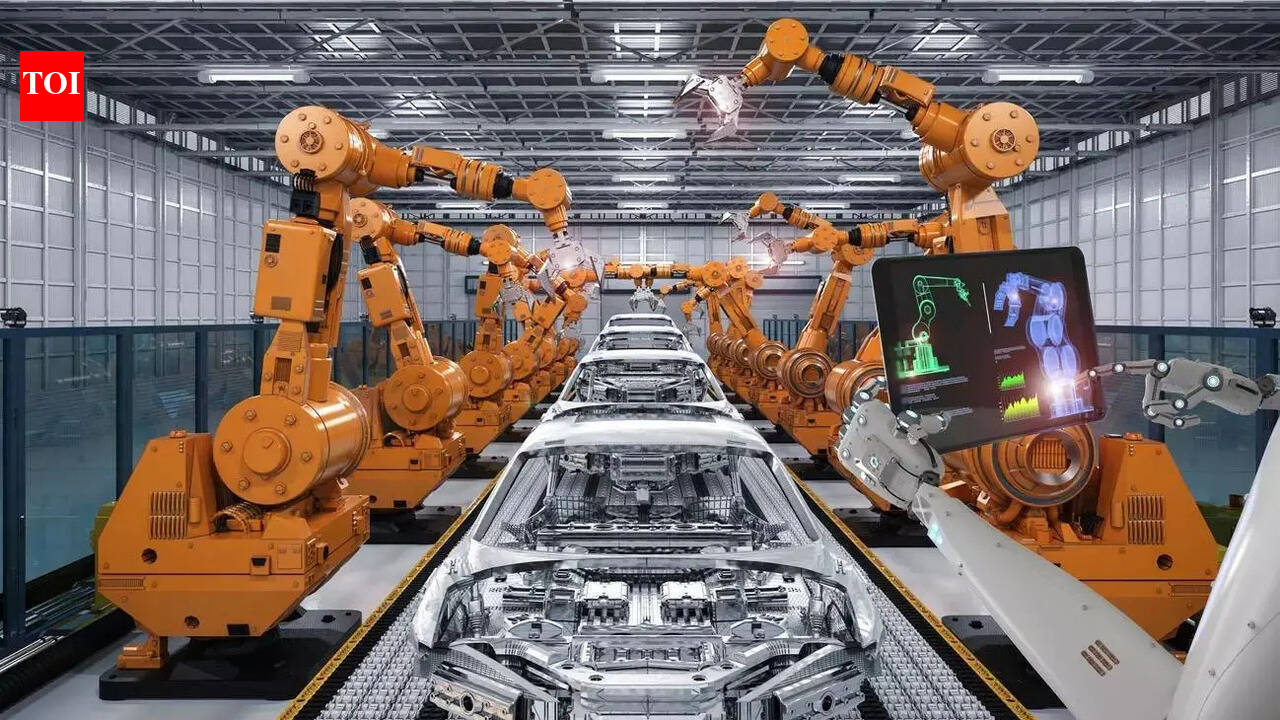
 image sourced from original article at
 German robotics manufacturer Kuka is shifting its strategic focus toward Asia and the United States, citing slow adoption of artificial intelligence and automation technologies in Europe. Chief Executive Officer Christoph Schell said many European companies, particularly in Germany, continue to rely on legacy systems and gradual upgrades, limiting their competitiveness against faster-moving global rivals.
Schell noted that several industrial firms in Germany believe current challenges are temporary, especially in the automotive sector. However, he warned that international competitors are producing goods that are not only cheaper but also superior, while European companies are increasingly competing for shrinking opportunities and accepting lower profit margins.
Kuka sees stronger growth prospects in the United States, where import tariffs are encouraging domestic manufacturing investment, as well as in China, India and Southeast Asia, where technology adoption and infrastructure expansion are accelerating. The company, which was acquired by China-based Midea Group in 2016, continues to supply industrial robots to major manufacturers including BMW, Volkswagen and Airbus.
Germany's broader economic slowdown, marked by weak growth and high energy and labour costs, has added to the challenges facing export-oriented industries. In response, Kuka has expanded further into software engineering and artificial intelligence-driven manufacturing platforms while maintaining its core robotics business.