
 image sourced from original article at
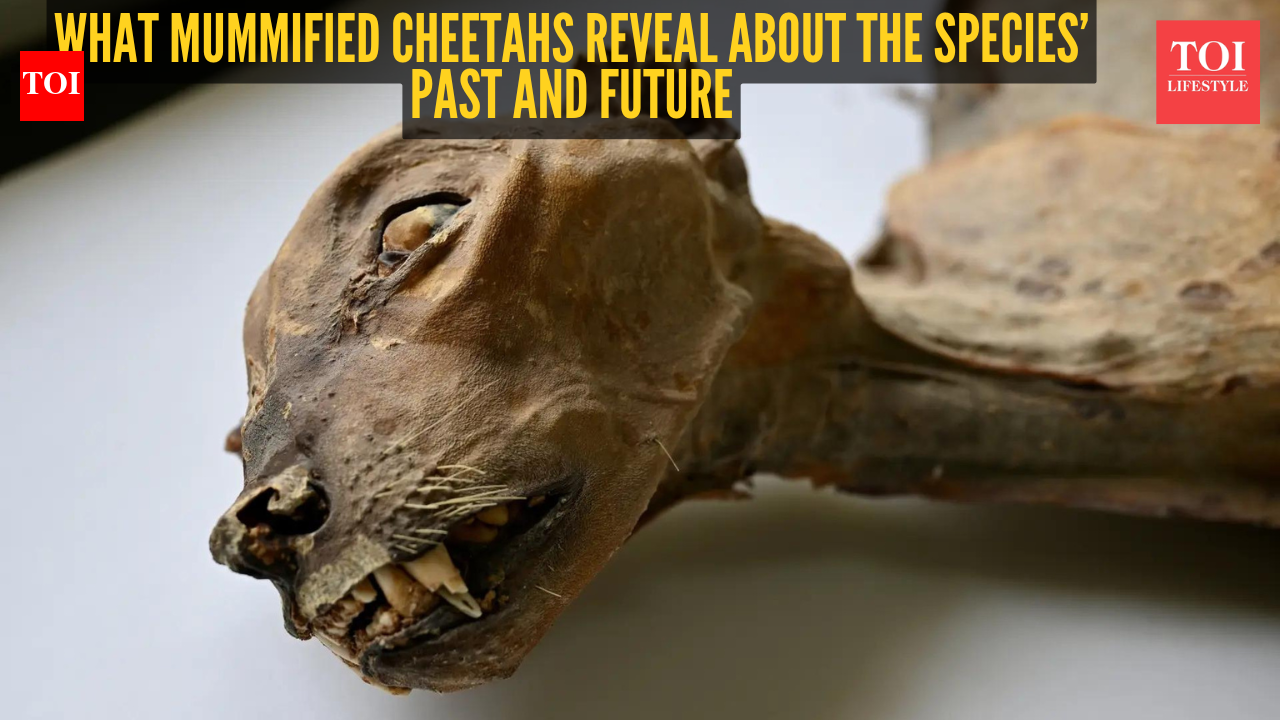
 Scientists have uncovered naturally mummified cheetahs in a remote cave in Saudi Arabia, prompting a major reevaluation of the species' history on the Arabian Peninsula. The discovery, which includes remains dating back nearly 4,000 years, revealed that cheetahs used underground caves as long-term habitats, seeking shelter from harsh desert conditions. Analysis of the mummified specimens allowed researchers to extract complete genomes, showing close genetic ties between ancient Arabian cheetahs and both Asiatic and Northwest African cheetahs.
The findings challenge previous assumptions about cheetah behavior and distribution, as well as their extinction timeline in the region. With Saudi Arabia preparing habitats and restoring ecosystems, scientists are now considering the possibility of reintroducing Northwest African cheetahs to the peninsula. While the future of cheetahs in Saudi Arabia remains uncertain, the discovery offers new hope for conservation efforts and a deeper understanding of the species' past.