
 image sourced from original article at
 Archaeologists have uncovered a group of rock-cut tombs dating to the Old Kingdom on the west bank of the Nile River at the Qubbet el-Hawa site. The tombs, complete with shafts and burial chambers, add to a location first excavated in the nineteenth century and later designated a World Heritage site by the United Nations Educational, Scientific and Cultural Organization.
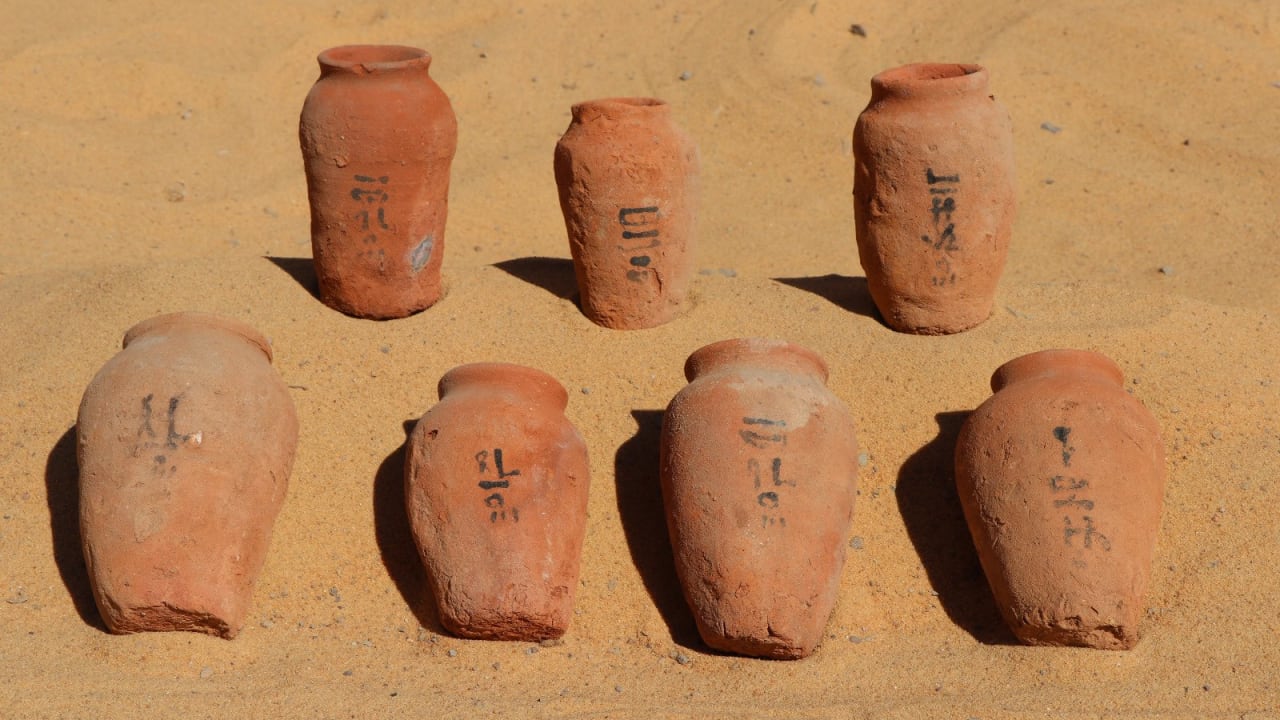
Inside the tombs, researchers found around 160 pottery vessels, most in good condition and inscribed with Hieratic script, a cursive system derived from hieroglyphics. Preliminary studies indicate the vessels were used to store liquids and grains. Bronze mirrors, alabaster containers, colorful bead strings and various amulets from the Middle Kingdom were also discovered in the outer courtyard.
Officials said the tombs were originally constructed during the Old Kingdom and reused in later eras, including the First Intermediate Period and the Middle Kingdom, underscoring the site’s long historical significance. Authorities praised the excavation team and said continued discoveries are expected to deepen understanding of ancient Egyptian civilization and strengthen cultural tourism.