
 image sourced from original article at
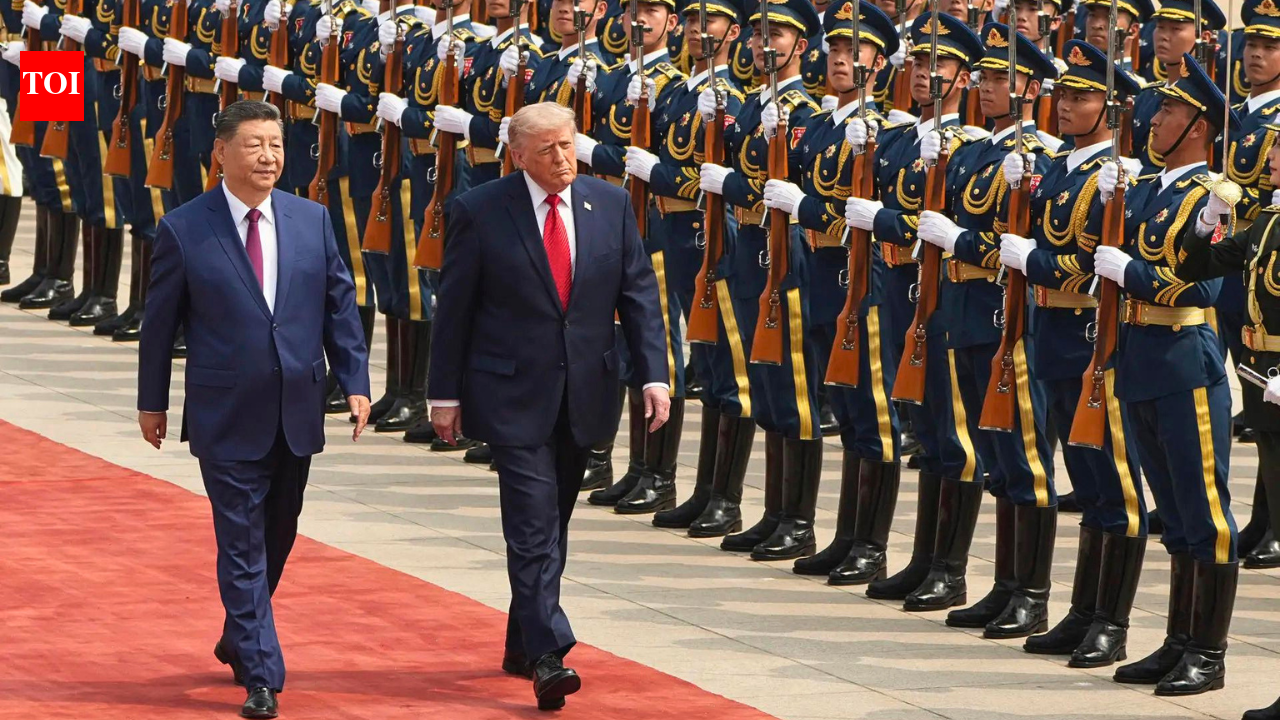
 United States President Donald Trump adopted a notably restrained tone during his visit to Beijing, where Chinese leader Xi Jinping staged an elaborate display of military precision and national power. The spectacle appeared designed to signal that the era of unquestioned American dominance may be shifting. While Trump praised Xi as a 'great leader,' the visit underscored a deeper strategic rivalry, particularly as China issued blunt warnings over Taiwan and showcased growing military and technological confidence.
Beyond symbolism, the article highlights how modern warfare is evolving. Conflicts are increasingly shaped by drones, artificial intelligence, satellite navigation and cyber capabilities rather than traditional measures such as troop numbers or warship fleets. China's BeiDou navigation system, reportedly used by Iran to enhance drone accuracy, illustrates how Beijing's technology is influencing battlefields beyond its borders and indirectly testing American systems.
A recent assessment by the Center for Strategic and International Studies warned that the United States faces potential shortages in long range precision weapons, with production timelines stretching years. Simulations of a possible Taiwan conflict suggest that American and Taiwanese forces could quickly exhaust key munitions, while China continues to expand its military industrial capacity at speed. The broader concern is not only about current strength, but about which nation can sustain a prolonged high intensity conflict.
At the heart of the rivalry lies industrial power. Analysts argue that future wars will depend on manufacturing capacity, supply chains and the ability to rapidly produce drones, missiles and autonomous systems. Beneath the carefully managed diplomacy in Beijing, the real contest is over who will define the next era of global power and who can endure the demands of tomorrow's warfare.