
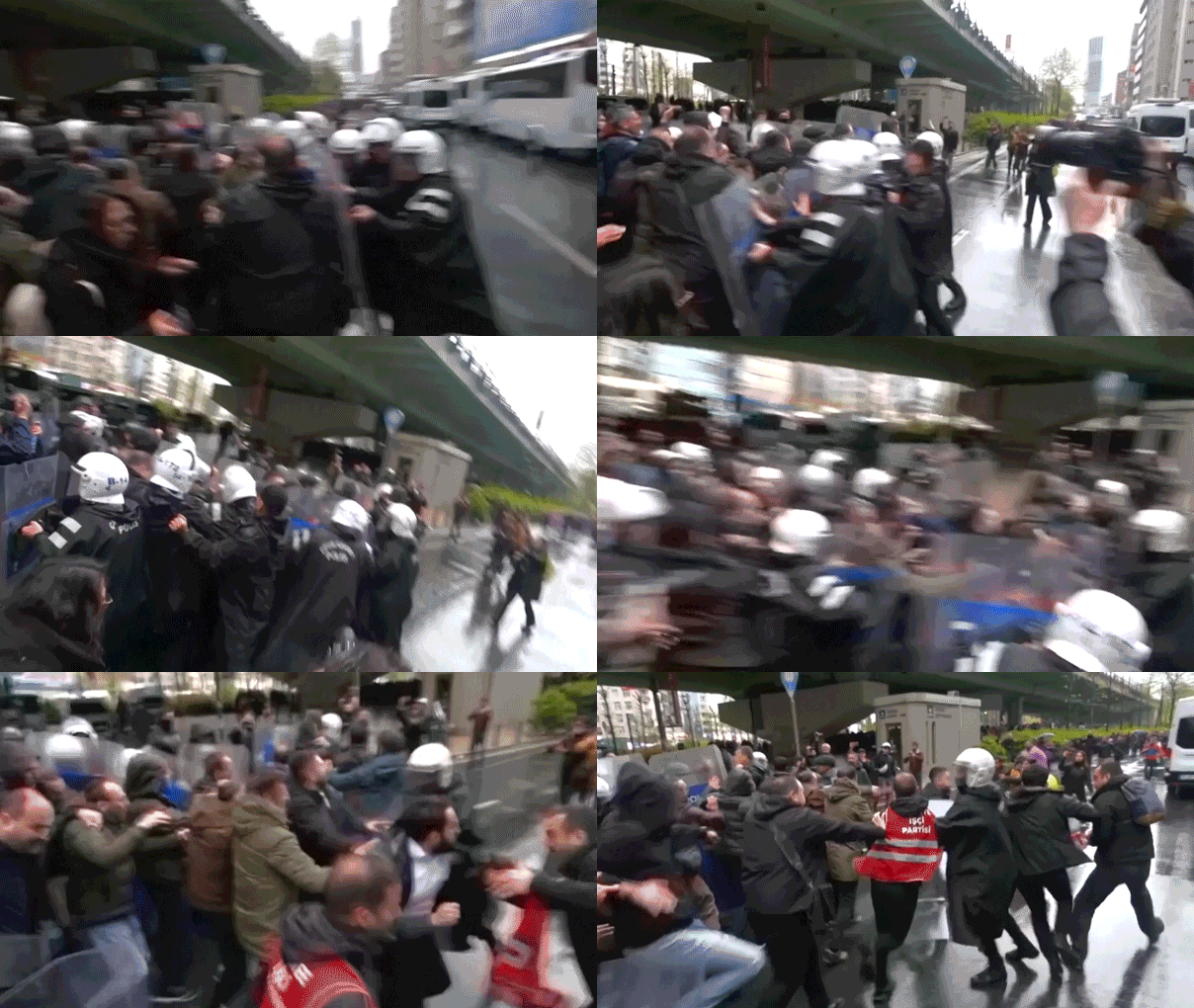
 image sourced from original article at
 May Day demonstrations across Europe and Asia escalated beyond traditional labor demands this year, evolving into broader political confrontations marked by anti-American and anti-Israel rhetoric. While many rallies began with calls for higher wages, inflation relief and stronger worker protections, protests in cities including Paris, Madrid, Istanbul, Manila and Seoul increasingly linked economic grievances to the war in the Middle East and criticism of the United States and its allies.
In several European capitals, clashes broke out between protesters and police. In Paris and Munich, authorities used force to disperse crowds after projectiles and pyrotechnics were reported, while in Istanbul police blocked marchers from reaching the symbolic Taksim Square. Demonstrators carried Palestinian flags, criticized military spending and displayed signs targeting both President Donald Trump and Israeli Prime Minister Benjamin Netanyahu.
Similar themes emerged in Asia, where protesters in Manila gathered near the United States Embassy and labor leaders in Seoul voiced solidarity with Iranian and Palestinian causes. Analysts cited in the report warned that May Day events are increasingly serving as platforms for broader ideological movements, blending labor activism with anti-capitalist, anti-Western and geopolitical messaging.
Observers noted that the shift reflects a growing pattern in which International Workers' Day is no longer centered solely on workplace concerns, but has become an arena for wider global political struggles.