 image sourced from original article at
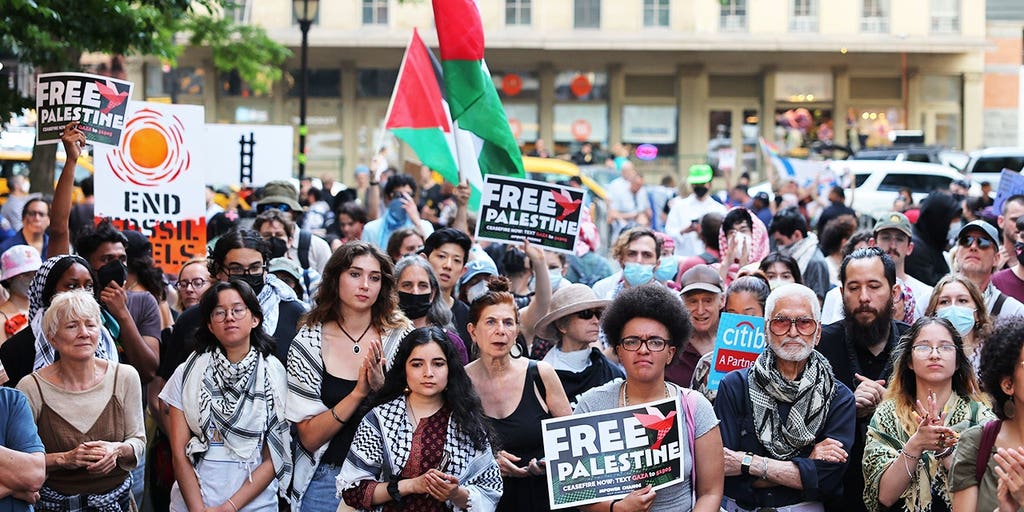
 Experts are warning that a growing convergence of climate activists, anti-Israel protesters, communist groups and Islamist movements is increasingly united by anti-American sentiment and, in some cases, financial backing linked to China. Analysts say these otherwise distinct causes are finding common ground in opposition to the United States and Western influence, forming what some describe as an ideological alliance aimed at weakening Western cohesion.
Hudson Institute fellow Zineb Riboua argues that this overlap is driven by an ideology sometimes referred to as 'Third Worldism,' which frames global politics as a struggle between oppressors and the oppressed, with the United States cast as a primary villain. She and other experts point to protests where climate activists and pro-Palestinian demonstrators have rallied together, as well as activism targeting new data center projects tied to the artificial intelligence industry.
Critics contend that these campaigns are increasingly focused on blocking or delaying energy and infrastructure projects vital to artificial intelligence development, potentially undermining the United States in its technological competition with China. Energy specialist Brenda Shaffer warns that while Western activists oppose fossil fuels and large-scale infrastructure, China continues expanding coal production and industrial capacity, gaining a strategic advantage.
Both experts argue that sustained opposition to energy and data center projects could raise costs and slow development in the United States, weakening its position in the global race for advanced technologies. They caution that adversarial powers have historically benefited from similar activist movements that limited Western energy independence and industrial growth.