 image sourced from original article at
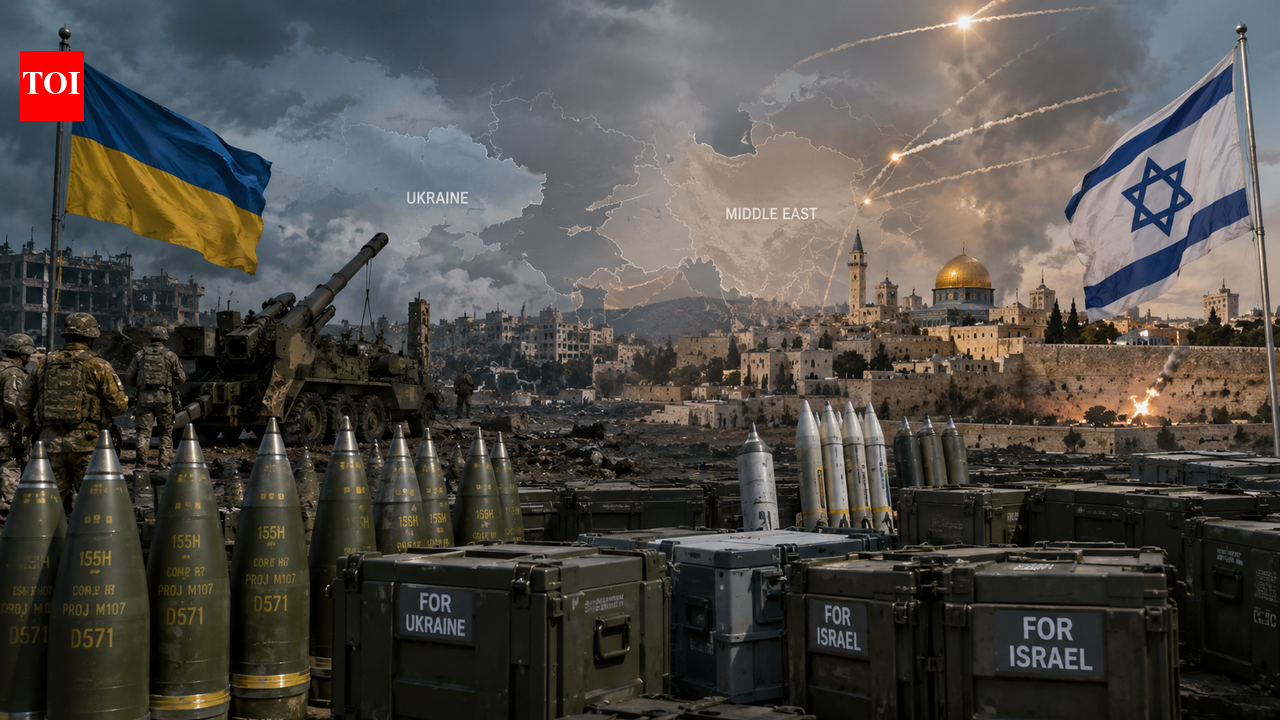
 The wars in Ukraine and the Middle East have exposed a growing strain on Western military stockpiles, as the United States and its allies struggle to supply two major conflicts at once. What began in 2022 as an urgent effort to arm Ukraine against Russia has evolved into a prolonged industrial war consuming vast quantities of artillery, missiles and air defence systems. At the same time, escalating violence involving Israel and Iran-backed groups has sharply increased demand for many of the same weapons, particularly advanced interceptors.
Both Ukraine and Israel rely on sophisticated missile defence systems that require complex manufacturing processes and fragile global supply chains. Production cannot quickly match the pace of battlefield consumption, and a single week of heavy fighting can absorb months of output. This has forced difficult decisions in Washington and European capitals about how to prioritise limited supplies when immediate crises erupt.
The dilemma carries wider strategic consequences. Support for Ukraine is seen as essential to containing Russian expansion and preserving European security, while protecting Israel is closely tied to the safety of American forces and stability in the Middle East. Shifting weapons to one theatre risks weakening deterrence in another, and adversaries such as Russia, Iran and China are closely watching for signs of Western overstretch.
Ultimately, the challenge goes beyond short-term logistics. The conflicts have revealed that decades of reduced stockpiles and downsized arms production left the West unprepared for simultaneous high-intensity wars. Rebuilding industrial capacity will take years, leaving policymakers to balance urgent battlefield needs against long-term strategic credibility in an era where multiple crises may unfold at the same time.